Certified Organic Ingredients and Sustainability – What does this mean?

A large percentage of AVNS products use ingredients labeled as “Organic” and “Sustainable”, so what does this really means to us?  

Organic. This is a term thrown around a lot in today’s world, so how do we really know that something labeled as organic is really free from pesticides, hormones, chemicals or anything artificial?

Organic in it’s generic meaning is defined as something grown at a natural pace. The dictionary says organic is “relating to or derived from living matter”. So based on these definitions, anything grown, could be defined as organic in it’s generic term. But today, this is what we tend to view as “natural”, not necessarily organic.

When you see the term “organic” on a label, check to see if either the product, or the ingredients used are “certified organic”, then you know that the product, food or ingredient was produced with a set of farming and production practices defined and regulated, in great detail, by the USDA. Items grown from the earth must be certified by regulatory agencies that perform soil tests. Additionally, soil must have at least 3 years of no pesticide treatment before it can be certified to begin with. “Certified organic” guarantees no toxic synthetic pesticides, toxic synthetic herbicides, or chemical fertilizers are used in production, and no antibiotics or growth hormones are given to animals.

However, there are companies and farms that choose not to become certified, but still hold to, and many times exceed the regulations given by the USDA. I personally know some small local farms that do just this. I have gotten to know the farmers and am familiar with their practices, and know I’m getting fantastic products from them. Even though they are not certified.

At AVNS, even though we are not a certified organic company, we do use certified organic ingredients. Sometimes we choose to use a natural ingredient instead of one that is certified organic, but we try to weigh the cost/benefit ratio for our customers. We want to make the best possible products for a reasonable price.  On average, our products are made with about 80-90% certified organic ingredients. So you can rest assured that the products you receive are not only beneficial to your body, but are also competitively priced.

Sustainablility. Another word that can mean different things to different people. We use Certified Organic Sustainable Palm Oil in many of our soaps, and palm oil has come under a lot of scrutiny in the recent past. So how do we “vote” with our money? We purchase products and ingredients from companies that have verified their source of sustainable palm oil. AVNS supplier of organic palm oil is both certified by the Rainforest Alliance and the RSPO. This means for AVNS customers that they (and you from your purchase), are supporting the fight against deforestation and supporting the building of economic opportunities and better working conditions for rural people. Here’s a couple of links which will explain more about what this means in detail:

https://www.rainforest-alliance.org/articles/rainf…

https://rspo.org/about

As AVNS continues to grow and serve, we have at the heart of our mission to honor God, and then serve our customers with the best possible products that will nourish, heal and restore. All natural goodness from the top of our heads to the tip of our toes.

Until next time,

Marianne 🙂

Fabulous Friday & Glycolic Peel

Have you ever had one of “those” days? 

You know, one of those days where you have great plans for everything you’re going to get done, but by the end of the day, even though you’ve been busy, you’re not quite sure how you managed to NOT get anything on your list done.

Well that’s been my day, well, it’s actually been my last week. At least it feels like it. 

Truthfully, I have been busy. Busy with the business (AVNS), busy with family, busy with life in general. But I don’t think I’m any more busy than most people, it seems to be the world we live in. But I guess that doesn’t make it okay. I’m starting to realize that when we’re busy, we miss out on so many things. So busy is okay for periods of time, then we need to do life with our family and friends.

Now I’m laughing at myself, this is NOT what I was going to blog about, but hey, welcome to my life!!!

This blog is over due, sorry! 

I thought it would be fun to give you all a recipe to try at home. We will eventually do some youtube videos, but we’re not quite there yet. So here’s a recipe I use at home on myself as a peel. Yes a homemade glycolic face peel, and I love it!

First, what is Glycolic Acid and it’s benefits?

Glycolic acid is simply an Alpha Hydroxy Acid (AHA) derived from cane sugar. It has many benefits, some of which are:

  • Removes blackheads
  • Purifies pores
  • Improves texture of skin
  • Gently exfoliates dead cells
  • Gets rid of acne scars
  • Brightens skin tone
  • Reduces hyperpigmentation

I’m sure there are more, but I was super excited when I saw how the texture of my skin improved after doing this only once. You may be tempted to try this every day, but don’t, that would be too harsh on your skin. Start with once a week and then eventually move up to twice a week if needed. 

The items you’ll need:

Sugar, brown or white. Lemon juice or Yogurt. Manuka honey (opt.). Small bowl and spoon.

Before we get started, here are some details about the ingredients and why:

I already talked about why we use the sugar, so I’ll move onto an ingredient we have listed as optional. Manuka honey. It is expensive, so that’s why I made it optional, but here are some of the benefits to consider:

It is a potent anti-inflammatory, so soothes inflamed skin while healing blemishes. It also helps balance the skin’s pH and contains amino acids which slough away dead skin cells, helping to keep pores clear. Another benefit I like is that Manuka honey has been shown to increase collagen cross-linking, promoting the structural growth of collagen in skin cells. And since amino acids are the building blacks of collagen, they also protect collagen. Healthy collagen means healthy, firm, youthful-looking skin. It is also a natural humectant, drawing moisture into the skin. This hydration helps to further enhance the skin’s elasticity and cell regeneration, as well as promote healing.

Lemon juice. We use this because it’s rich in vitamin C, plus it contains citric acid which helps with the effectiveness of the peel. But if you have sensitive skin, you may want to try plain yogurt instead. Yogurt contains lactic acid, it’s still effective with the peel, but more gentle on the skin.

The recipe:

1 T soft brown sugar

1 T lemon juice (or 1 T plain yogurt)

opt. 1 T Manuka honey (if you use the honey, reduce the lemon juice down to 1 tsp)

Small bowl and spoon

That’s it!

The process:

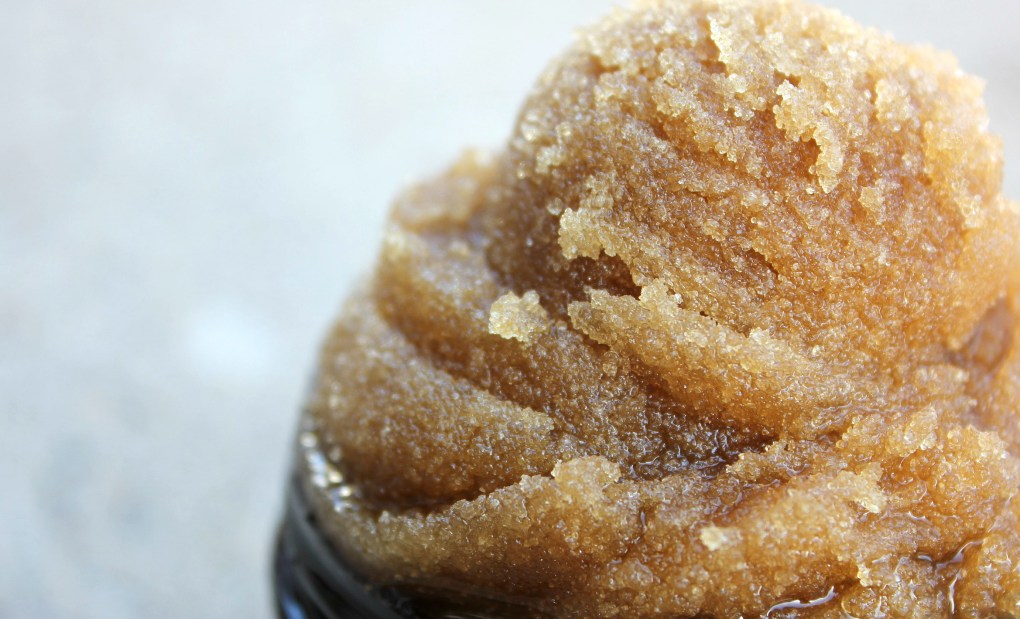
I use whatever sugar we have in the house, which is typically Muscavado. So I need to blend/grind my sugar down to a powder so it is more gentle on my face. But if you’re using a fine grain/soft sugar, you’ll be okay.

  • Put your sugar into a bowl and add the honey (if using), and lemon juice (or yogurt).
  • Mix together until they are well combined. 
  • Apply gently in circular motions to a clean and slightly damp face. Avoid eyes and mouth.
  • Let it sit for 3-5 minutes
  • Rinse thoroughly with warm water, pat dry and follow with a moisturizer.
  • Love your skin!!!

Let me know if you try it 🙂

Until next time,

Marianne