Beauty and Health Benefits of Salt for Your Skin

I challenge you to a friendly contest.

Get a pencil and set your timer for thirty seconds.

Now, on the countdown of three start your timer and write down all the uses of salt that you can think of!

Okay?

Three.

Two.

One.

Go!

Time’s up!

Hopefully you were able to think of a few things. I’ll share my list at the bottom and you can see how yours compares to mine. However, before you scroll down there to competitively evaluate who came up with more answers…I think both of us deserve a freebie (like the Free Space in BINGO) for all of our hard work.

Free Space: Salt Soap Bars

Why put salt in soap?

I know you’re probably wondering if salt is used to flavor soap like it’s used to flavor food (and let me tell you, some of the AVNS soaps do look good enough to eat!). However, that’s not the reason salt bars exist.

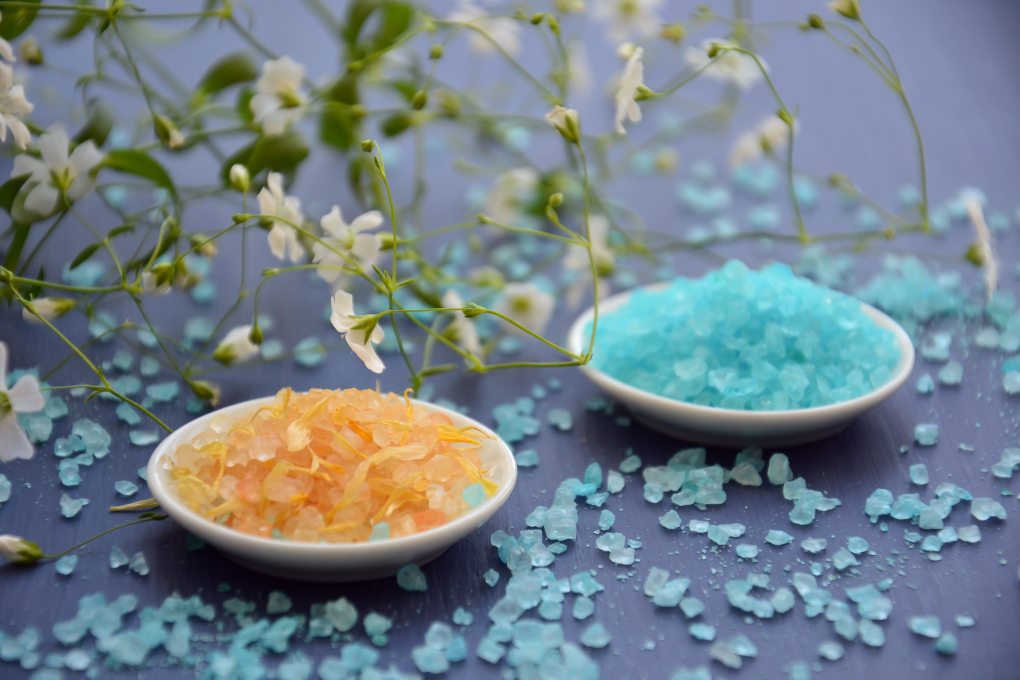
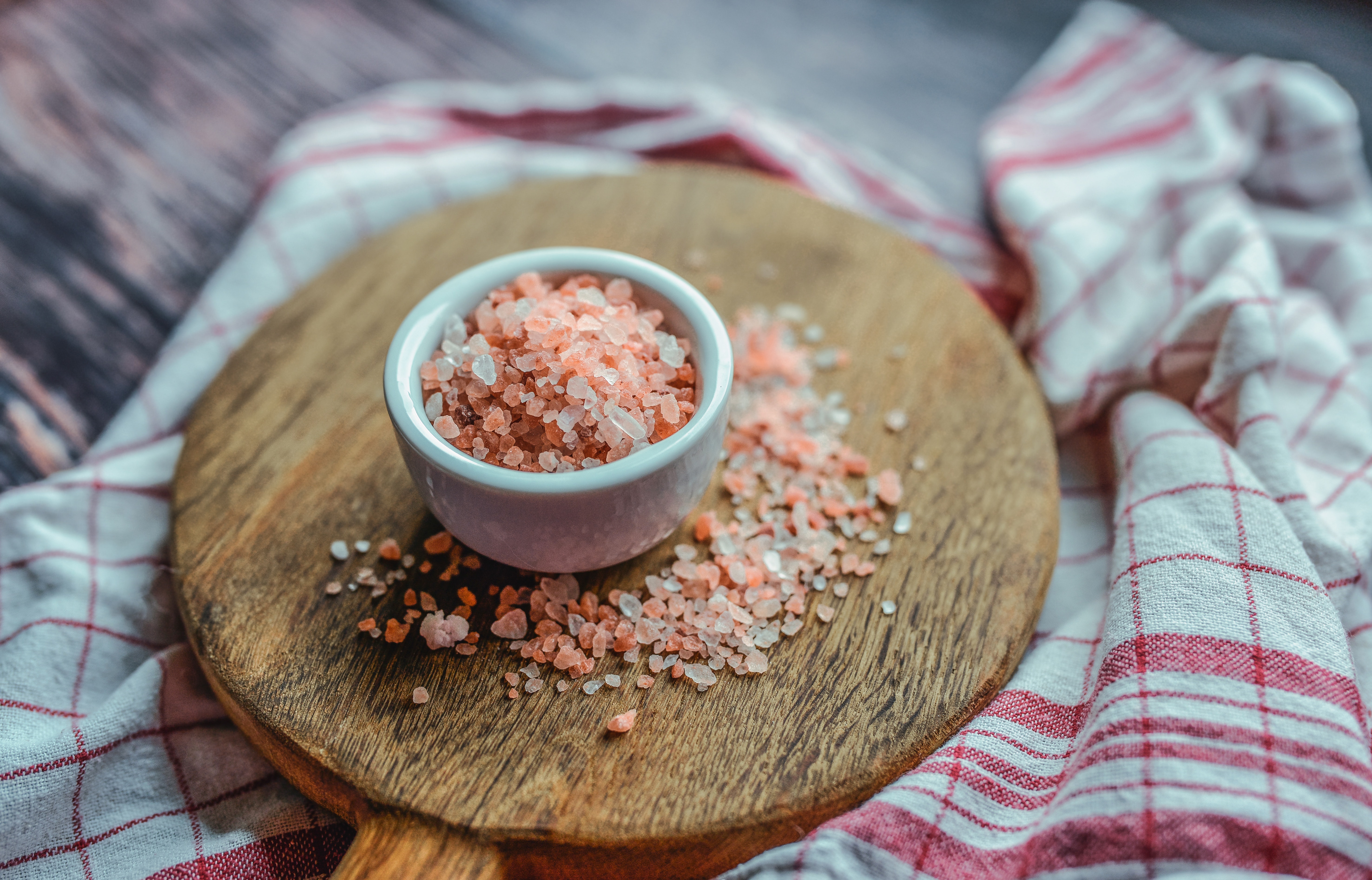
The salt in salt bars simultaneously serves as an exfoliant and a natural antibacterial agent. When the larger grains come into contact with your skin they remove the dead skin cells that have accumulated and allow clogged pores to breathe. 

While the AVNS Lime Spa Salt Bar is a great way to prepare for a flawless shave, our Pink Himalayan Salt Bar provides the perfect grit for combating calloused hands and feet. When new skin is exposed, the salt also cleanses it from bacteria (and if you’re ready to relive your high school biology days hang in there and I’ll explain how).

Salt as a natural antibacterial agent

The salt creates a hypertonic solution (meaning it will attract water through osmosis). Because bacteria is mostly composed of water — just like the human body — when it comes into contact with salt, the salt will leech water from the bacteria, leaving it to shrivel and die. 

I took this photo off the quaint coast of the Cinque Terre in Italy during my study abroad trip to Europe this past fall, where are your favorite oceanside travel destinations?

Keeping harmful bacteria off of your skin is important, but many artificial chemicals used in antibacterial soaps have been banned because they were not shown to have any health benefits and in some cases there has been evidence suggesting some chemicals may have dangerous effects

Antibacterial hand sanitizers often contain alcohol that strips the skin of bacteria, but because it is such a harsh substance it makes your skin dry. Salt bars are a natural solution that will fight bacteria, but will also replenish your skin and body with much needed minerals. The European Spa Salt used by Apple Valley Natural Soap is solar evaporated and comes from the pristine waters of the Mediterranean sea.

Apple Valley Natural Soap’s stunning salt bars

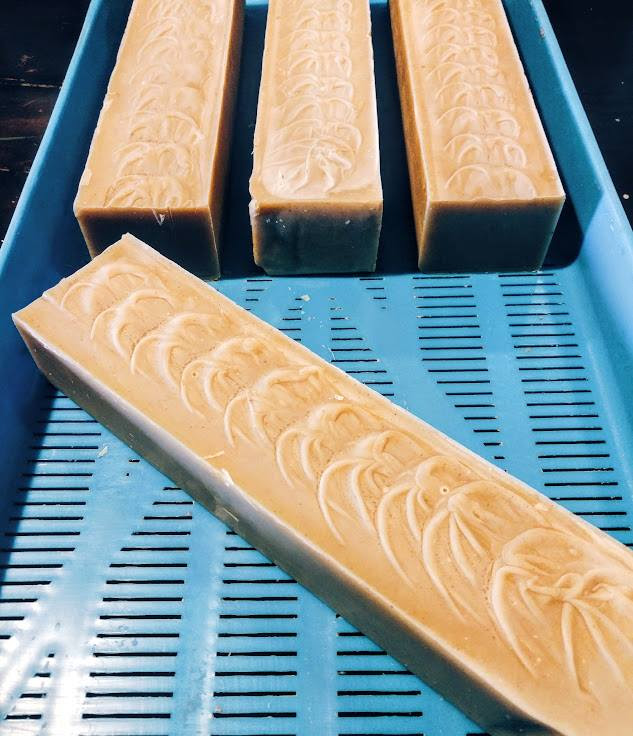
AVNS has a striking lineup of beautiful salt bars, I’m actually going to leave a link right here so you can just go look at all of them side by side because the gentle color palate and rich texture of the salt is soooooo aesthetically pleasing. It’s like looking at artisanal blocks of artist’s chalk…except instead of drawing on the sidewalk you get to lather your body! The dove grey Orange Anise Salt Bar is hands(washing)down the most gorgeous bar of soap I’ve ever seen and Marianne recommends pairing it with a white or black soap placemat as a modern finishing touch (just beware that this stylish touch could make people mistake your bathroom for a high-end art gallery!). The best part is — these bars aren’t just for looks! You won’t even need to scratch your head in wonder when I tell you that the glowing white Lavender Rosemary Salt Bar doesn’t just look great on a placemat, it also acts as a Shampoo Bar that relieves itchy scalps.

I guess I ended up with more than one freebie because we’ve now covered salt as: an antibacterial, an exfoliant, and a source of skin-nourishing minerals…but hey, one salt bar will cover all those things, so I guess it’s three freebies in one!

Without further ado: Nora’s 30 second Salt List

  1. Melts snow on roads and sidewalks
  2. Himalayan Salt Rock Lamp
  3. Salt Blocks for horses
  4. Flavors food
  5. Repels leeches
  6. Helps your hair curl?

Everything You Need to Know About Castile Soap

How is my love for acting related to Castile soap?

When I play a character in a show, I not only get to fill their shoes, I also trace their footsteps. 

Here I am with my fellow actor Dah in our production of I Hate Hamlet. I absolutely loved my costumes for this show…I felt like a princess!

Because of this, I’ve travelled through a number of character paths that have taken me around the world: I’ve stolen a Commedia dell’arte romp through the winding canals of Venice, floated through the dreamscape of Charles Dickens’s London, explored the historical and haunted flats that make up the New York City skyline, and washed a peasant’s laundry in (and I think you’ll see where I’m going here) Castile, Spain.

Castile? Wait, isn’t that a type of soap?

You guessed it!

The history of soap

Early soaps were made from combining animal fats and plant oils with salt or ash. This primitive soap was used for cleaning cooking utensils and medicinal purposes rather than for beauty and personal hygiene. As soap making became more refined it also became more expensive because it required both technique and coveted family recipes. Prices only dropped after production became more mainstream when chemicals were introduced to simplify the process.

What is Castile Soap?

Castile soap has been around for quite some time, but unlike the first soaps ever made it does not contain animal fat or ashes. However, a traditional Castile soap is also free from modern chemicals used in most mass-produced soaps.

So if it doesn’t have chemicals or animal byproduct, what exactly is it made of?

Olive oil.

And I’m sure you already guessed where those olives were grown.

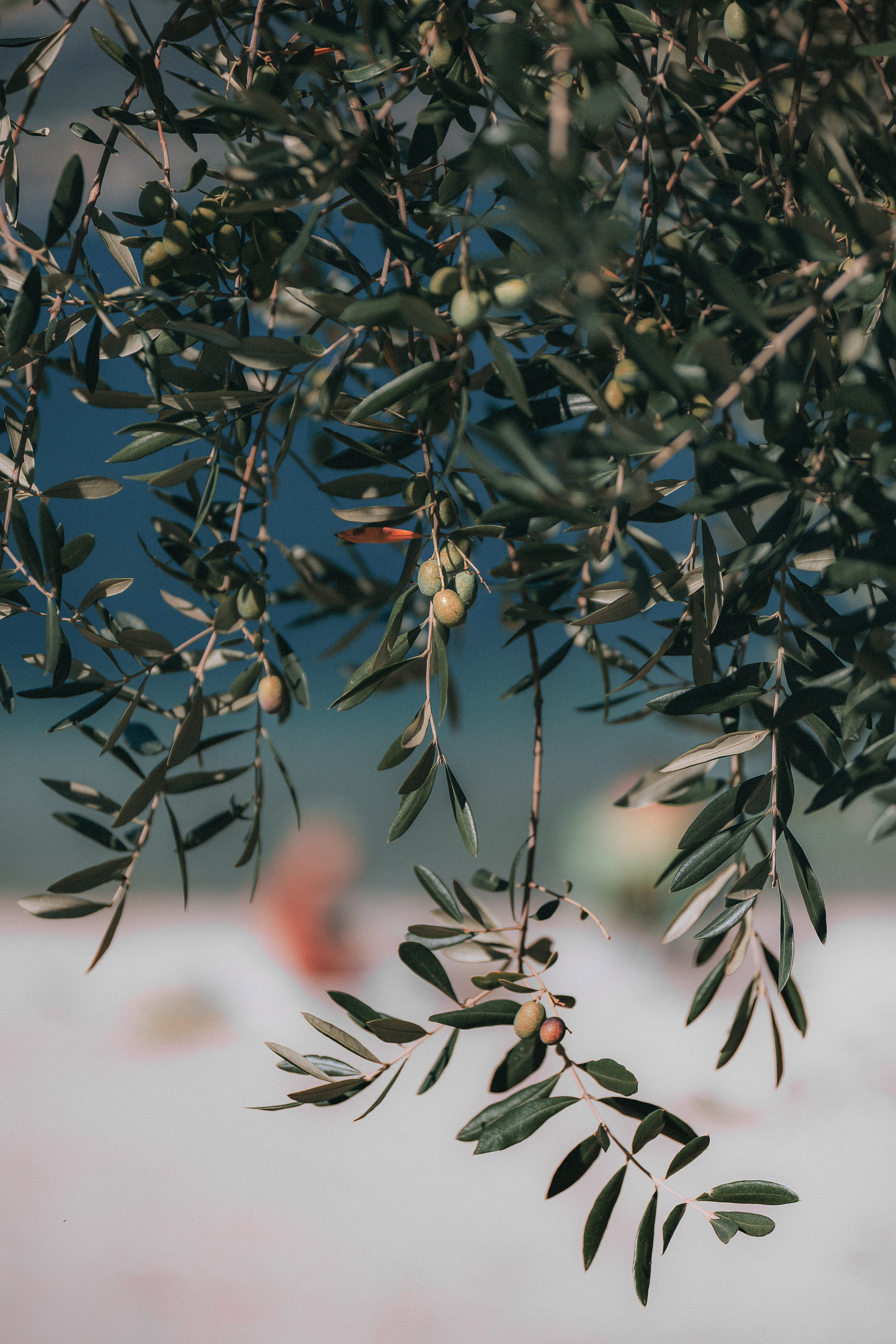
Spain exports the world’s majority of olive oil and the production of olive oil in Spain can be traced back about 3,000 years. Although Castile soap got its name from a specific region in Spain, Castile soap can be made with olive oil from anywhere…which has its disadvantages.

The benefits of olive oil in Castile soap

Because Castile soap is generally defined as soap made with olive oil, many companies can get away with using small quantities of low grade olive oil while still labeling the soap as “Castile Soap” This soap will not have the same benefits as a soap composed of high quality olive oil.

Now, the advantage of using olive oil from outside of Castile is that it allows us to pick from the best. In keeping with the origins of the first Castile soaps, our organic virgin olive oil is sourced mainly from the Mediterranean region. Our true Castile soaps provide a gentle cleanse and act as a nourishing moisturizer. Our virgin olive oil is chemical free and retains its vitamin content, the reason behind olive oil’s health benefits (especially vitamin E). Vitamin E protects skin from the damage of free radicals and can help alleviate symptoms of eczema.

We choose to go organic with our virgin olive oil and many of our other products to promote the protection of the earth and water from harmful pesticides and we want our Castile soap to do the same for your skin. Our Calendula Castile Bar is the perfect soothing solution for sensitive skin (babies would highly recommend it…if they could talk). Our Lavender Castile Bar will create a calming, creamy lather…perfect for shaving! I know I’ve got the Lavender Orange Castile Bar on my wish-list and I’ve got an audition for Antigone tomorrow so I’m ready to get into character (Greece likes its olive oil too!)

Wish me Luck!

Nora


How to Achieve the Perfect Shave in Under Ten Minutes

We’ve all been there

It’s a frigid Tuesday, the most unassuming day of the week. Sweater weather is in full swing — even though it’s February — and snow swirls in gusts outside your window. You’ve just lit one of your favorite candles and are curled up on the couch pretending to read a good book while you secretly binge-watch “Grey’s Anatomy” (Season three) for the seventeenth time. Nothing like the perfect night off.

Then it hits.

The unexpected need to shave

Your husband comes home determined to whisk you off on a spur-of-the-moment romantic date. The girls call, you haven’t seen them for ages and they’re getting together tonight for pedicures. You’ve been promising your kids you’ll take them to the community center pool and tonight they’re not taking no for an answer. You spring into action, but as you’re pulling out the cute black dress, pedicure appropriate khakis, or kid-proof swimsuit — the thought hits you: when was the last time I shaved my legs?

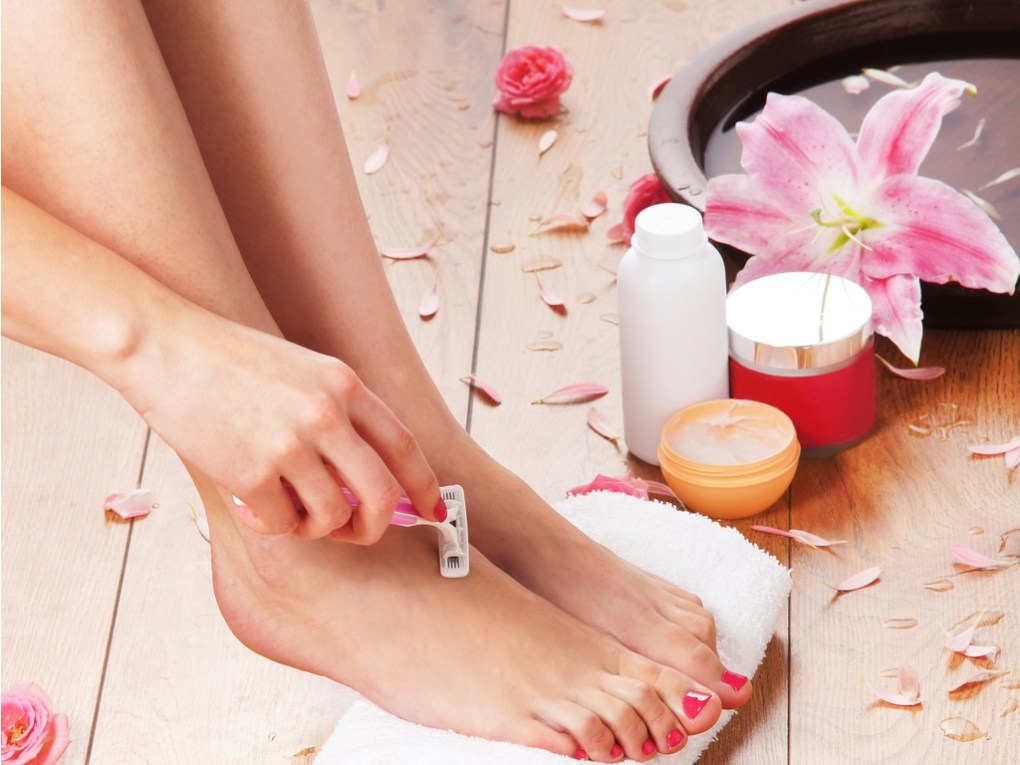
Next thing you know, you’ve stripped off your fluffy pajama pants and staring up at you are your two, hairy Chewbacca legs. You’ve literally been caught with your pants down and you only have ten minutes to achieve the perfect shave.

There are those of you who do not shave, I applaud you. Smooth legs are a preference and they may not be yours and that is okay because your legs are beautiful with or without hair and you know it. While I would someday like to grow my leg hair out long enough to knit around myself, I cannot resist the feeling of freshly shaved legs against smooth sheets. For those of you who feel the same way — let’s figure out how to get you and your smoothest legs out the door in the next ten minutes.

How to get smooth legs quickly

Step One: Let ‘em Soak

As tempting as it is to give your legs a one-second splash before you get razor crazy, you’ll actually benefit from a longer soak. According to Dr. Christy Rainey, MD, a board-certified dermatologist, the warm water will open your skin follicles, leaving your hair shaft better exposed for a closer shave.

Step Two: Exfoliate First

Exfoliating is the best way to prep your skin for a smooth shave. After you’ve soaked for a minute or two your top layer of skin will be soft. When you exfoliate, you gently remove all the grime and dead skin that has accumulated on the surface of your skin, clogging your pores. Removing the build-up will let the razor glide over your skin and the circular motion of your exfoliation will help position your hairs upright so that the razor can cut them. The Sweet Rosehips Body Polish is a gentle scrub that will leave your skin smelling sweet and feeling soft.

Step Three: Lather Up!

Once your bristles are ready it’s time to get the soap out. I used to rely on shaving cream and let me tell you, more times than not I’d end up reaching for an empty aluminum can of disappointment. Left with no choices, I’d resort to whatever cheap body wash someone else had abandoned and often times it left me with dry, scaly legs. Thankfully, you can eliminate waste and double up by simply using an AVNS body bar. The Rosemary Lavender Coconut Bar or Wildflowers Coconut Bar can be worked up into an incredibly thick and luscious lather, will last longer, give you a natural cleanse and provide additional moisture.

Step Four: The Razor Race

At this point, it’s up to you. You know your legs and you know how to shave them. Long, even razor strokes and frequent razor rinses will keep you from getting burns and cuts.

Step Five: Moisturize. Moisturize. Moisturize.

The body scrub I mentioned above is fantastic because it often a provides a two-in-one exfoliant and moisturizer. But if you’re heading out into the frozen tundra and are prone to dry, winter skin, you’ll need to lock in all the moisture possible. Using one of our Lavender Lotion Bars or Lavender Vanilla Baby Butter will not only give you baby-soft skin, the organic lavender essential oil we use may also help heal and protect any micro cuts left by your razor. 

Step Six: Stock Up

You never know when the unexpected may strike. Having products ready will prevent you from having to undergo the dreaded dry-shave. But guess what? As thrilling as the unexpected is, you never need a reason to pamper yourself other than the fact that you deserve it!

Much Love,

Nora


I’ve Got a Golden Ticket (To Apple Valley Natural Soap): how we make our natural soap

Chocolate factory…or Natural Soap factory?

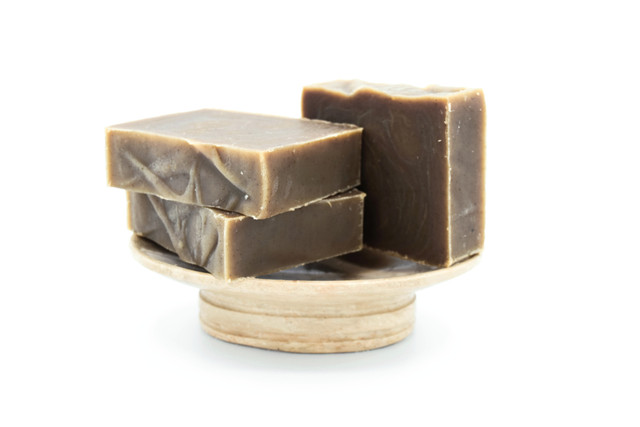
If at first glance you mistook the photo above for a thick block of delicious chocolate fudge, don’t worry, I did too. Believe it or not, that’s actually the Salted Chocolate Sink Bar…so even if you can’t sink your teeth into it, you can still give your hands a good lather. The Salted Chocolate isn’t the only AVNS soap bar that looks good enough to eat, in fact, just browsing the AVNS website makes me feel like a kid in a candy store, and let me tell you, meeting Marianne for the first time felt a little like shaking hands with Willy Wonka himself.

I love chocolate, so it’s no surprise that I adore Rohld Dahl’s classic tale, Charlie and the Chocolate Factory. I’ve always envied Charlie Bucket, the young hero who visits the mysterious and alluring chocolate factory and is swept into a whimsical adventure as he becomes privy to the secrets and inner workings of the fantastic factory.

While Charlie’s journey allows readers to peer into the fantastic world of Wonka’s factory, today I’ll be giving you the inside scoop on the process behind making our scrumptious soap!

Soap needs to be clean in order to clean!

You can have a giant factory with a bazillion hallways and rooms and a giant chocolate-churning fountain…or just a simple kitchen, but no matter where you set up, both Wonka and Marianne will agree that an important step in the creative process is cleanliness. When Augustus Gloop falls into Wonka’s chocolate river, Wonka is more distraught by the thought of contamination than he is about Gloop’s safety. The spaces where AVNS soap is made undergo scrutinous sterilization to ensure that the purity of each product remains intact.

Combining and balancing ingredients

The next step in soap making is to create a recipe. Great soap calls for a great recipe. The base ingredients lye and water are combined. The oils and butters are also combined as they gently melt at the correct temperature. Any delicate, heat-sensitive oils are added secondarily. When both the lye and oils are at the correct temperature, they are blended together until light trace (soap talk for the absence of oil streaks in the mixture). Finally, any essential oils and herbs are added and the soap is poured into molds.

As any chocolatier or “soaplatier” will tell you, attaining the correct balance of ingredients is essential. After Augustus Gloop gets sucked up the chocolate pipe and carried away to the fudge room, Mrs. Gloop panics at the thought of her son being turned into fudge. However, Mr. Wonka (knowing that Gloop would unbalance his recipe) reassures her he will not allow this to happen, “’Because the taste would be terrible..Just imagine it! Augustus-flavoured chocolate-coated Gloop! No one would buy it” (Dahl).

Can you imagine? Salted Chocolate Gloop Sink Bar? No, thank you.

The setting and curing process

One of my favorite parts in Charlie and the Chocolate Factory is when Violet Beauregarde steals a stick of gum from Wonka’s Great Gum Machine and starts chewing. Wonka tries to warn the greedy girl that his recipe is premature, but Violet does not heed his warning and before she knows it, she begins to swell like a blueberry while consequently turning a violent shade of violet. Using our soap will never turn you into a blueberry because like Willy Wonka, we know that timing is everything. After the soap is poured into molds it sets for 12-36 hours and then cures for another 2-6 months.

What matters most

Willy Wonka prides himself on the inventive and exotic origins of his candy creations, but what is most important to him — and what Charlie learns during his visit — is that at the end of the day, what really matters most is the chocolate.

AVNS has an impressive selection of unique soaps, all different and all hand made…but when stripped down to the core, there is a greater mission at hand. All of AVNS soaps are biodegradable, meaning that every ingredient used in an AVNS bar of soap can be broken down by microorganisms. This natural form of decomposition is eco-friendly, making our soaps like the Organic Coconut BarsOrganic Castile Soap Bars and the seasonal Camping Bar great (and packable) for your camping expeditions!

Although the Salted Chocolate Sink Bar is inedible, it does have a little Wonka-esque trick up its sleeve: it doesn’t contain added scent. The minimal ingredient list allows the natural scent of delicious organic cocoa butter to smell for itself! This isn’t the only unscented soap bar, many of our natural and organic soaps use minimal ingredients to cater to both the environment and sensitive skin. Our Calendula Castile Bar is only composed of saponified organic extra virgin olive oil and organic calendula petals, that’s a peace-sign amount of ingredients!

By using minimal, natural ingredients to make our soap, AVNS aims to promote peace: both inner and with the earth. I’d pick that kind of peace over a piece of chocolate any day.

P.S. Although our soap looks good enough to eat (and is Gloop-free) please do not nibble!


The Natural Benefits of Mint You Never Knew About

Mint is everywhere

Buying toothpaste is probably one of the most mundane errands in existence. You can stand in the dairy section of a store and spend half an hour picking out which flavor of ice cream you want, but visit the toothpaste shelf, or even the entire dental hygiene aisle and you’ll be overwhelmed by one flavor: mint. Considering this minty domination, it’s no surprise I’ve always taken mint for granted…until I started college.

How mint saved me from spiders

I lived in a triple room on an all-girl floor my Freshman year of college and we had a communal bathroom with shower stalls (they were the size of telephone booths, I kid you not). One day halfway through first semester I was on my way to shower when I noticed a funny bit of grey fluff on my comforter at the base of my bottom-bunk. As my hand fluttered down to flick it off, eight thick legs unfolded from around the fluff and the fluff itself began to scuttle. My hand shot back and I kicked up my legs as I gave a loud, surprised shriek as I realized that the grey fluff was actually a big, grey spider. Not one of those wimpy, spindly things, but an armored tank of a spider who had claimed my bed as its own and was willing to go into battle if I refused to surrender. Even now I feel slightly chilled thinking about it.

Once I knew my bed was not spider resistant, my small, cozy room became a scary, spidery place. In my imagination, spiders lurked everywhere. In my pockets, under my bed, and in my shoes. I was living in terror, so I did what any smart, terrified girl would do…I called my parents.

For the rest of the week I dreamed of all the heavy duty traps and snares my mom would bring me to defeat the spiders. I pictured mini spider cages with steel bars so strong no amount of extra legs could bend them and web weakener serum that would discourage the spiders from building webs anywhere near me. I was a little disappointed when my mom showed up armed with only two sticky traps and a little bottle of…what?…peppermint essential oil?

“Peppermint repels spiders,” my mom said.

Huh, sure it does

Despite being skeptical, I took my mom’s advice and for the rest of the year I crawled under my bed once a week and dispensed a few drops of peppermint oil along the baseboard of the wall. My roommates thought I was crazy, but I never saw another spider in my room.

Now, as to whether the spiders fled in response to the peppermint oil or just sensed a hostile vibe in the room and decided to skedaddle will forever be a question that keeps me up at night, but rest assured that there are some things I do know about mint.

What is Peppermint?

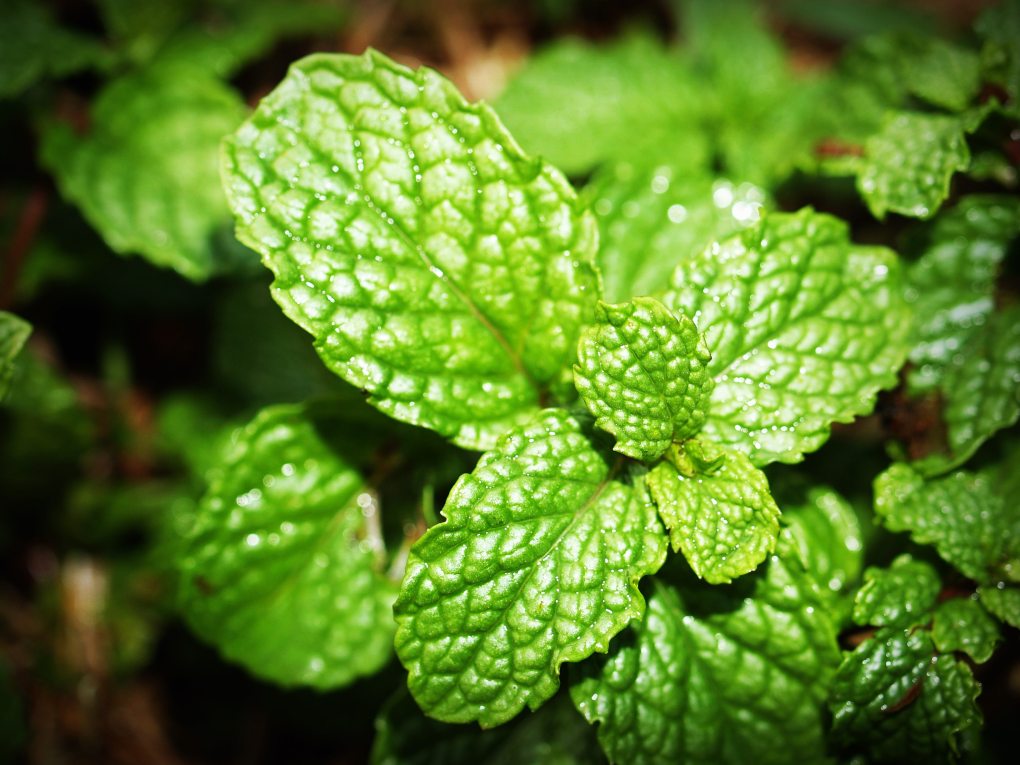
While we all know and love peppermint for its instant aroma of winter cheer, what you maybe didn’t know is that peppermint is a hybrid of spearmint and water-mint…that makes it like the golden-doodle of plants, right? Containing organic, Fair Trade peppermint essential oil from India and spearmint essential oil from Indonesia, both the Juniper Mint Castile Soap and the Matcha Mint Soap provide a big scrubba-dub-dub of rejuvenation. Did I mention that the Matcha Mint Bar also includes a refreshing measurement of matcha magic?…a matcha made in heaven!

How mint works to benefit skin

The rejuvenating quality of mint comes from the compound menthol. According to U.S National Library of Medicine, menthol triggers a specific receptor in our skin and the reaction is a cool-sensation. This creates a soothing feeling, which is especially great if you’re looking for the perfect exfoliation!

Toothpaste may be boring, but AVNS makes mint fun. You can choose from an amazing selection of minty combinations (including Rosemary Mint and Grapefruit Mint) and if you use a body or shampoo bar containing peppermint –like the Peppermint Tea Tree Shampoo Bar — who knows? You might even repel spiders! Only one way to find out!


How Embracing My Natural Textured Hair Changed My Life

Hi, I’m Eleanor (but you can call me Nora)!

As the newest member of Apple Valley Natural Soap, I’ll be writing informative and (hopefully) entertaining blogs inspired by AVNS’s products and the ingredients that go into making them. I could not be more thrilled about joining this fantastic, curl-friendly company!

I’ve been ruminating on a proper introduction and while I could go on for hours about my adorable dog, my passion for improv, and my international expeditions…I thought I’d share the aspect of my life that drew me to AVNS in the first place: my hair. However, in order to share my hair care journey, I’m going to have to come clean about something…

I Thought My Hair was Just Frizzy

I’m going to be honest,

I haven’t always taken care of my hair.

My hair was stick straight until sixth grade. Then it got frizzy. From seventh to tenth grade I blow-dried, straightened, and curled my hair with heat every day before school.

That’s right. For four years I woke up at five-thirty am every single morning so I could devote an extra hour to frying my hair.

Sometimes I’d have to straighten my hair and
use a curling iron to keep my hair from frizzing up again.

I did the math.

There are about 165 school days in a year, so one hour per day is 165 hours a year. Multiply that by four and your total is 660 hours. Divide that by 24 hours and that’s 27.5 days. That’s almost an entire non-leap-year February.

A month. A month-long, hair-frying marathon.

I find this horrifying, but not surprising. You see, I didn’t know any better and there was no one to tell me otherwise. I was stuck with a head full of poodle frizz and every hair commercial I saw just enforced my belief that you were either born with beautiful hair or could fix it with heat if you weren’t. Because of this, I did not feel comfortable or confident with my own hair.

Straightening My Hair Hurt My Self-Esteem

Now, I want to make it clear that there is a difference between doing something because you want to and doing something because you think you have to. There is also a difference between touching up your hair a bit every once in a while and changing it every day because you are ashamed of leaving the house otherwise.

How your hair looks my not seem like a big deal, but when you feel forced to alter something about your appearance in order to conform to society’s standards you risk sending another, more damaging message to yourself that says, “the way you are is unacceptable.”

I’m going to tell you something right now: that message is a huge, unacceptable lie.

Thankfully, nature gave me a huge dose of reality…or should I say, douse?

How I found out my hair was curly

In eleventh grade my family went on vacation in Mexico and because of the weight limits on luggage I was also forced to take a vacation from my blow-dryer and curler. After a day spent playing in the ocean all that salt gave my hair the boost it needed to prove to me that it could do more than frizz.

I guess nature has a habit of bringing out the best in us.

At first I thought maybe the curly hair thing was a fluke. For a few weeks I dipped my hair in a bowl filled with table salt and water to get the same results as I had from the ocean (Yes, I looked ridiculous doing this) but eventually I did some research. I bought curly hair products, styled my hair when it was wet, and left the heat tools in my drawer.

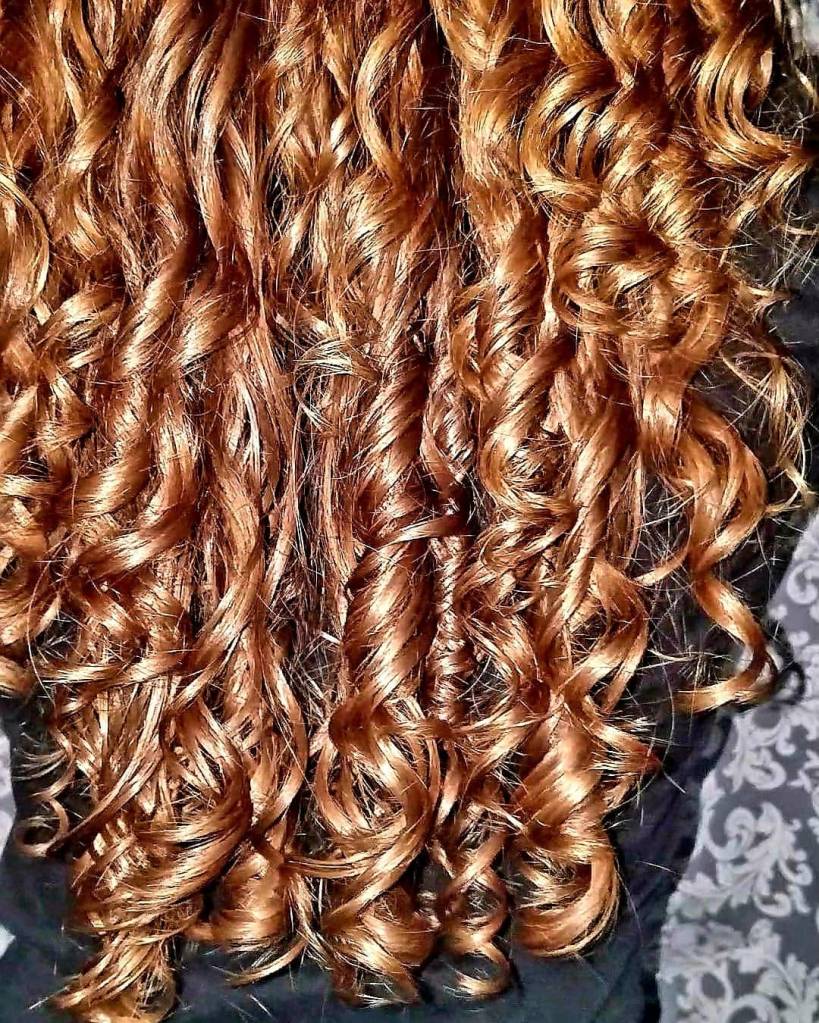
I included this goofy picture of me circa 2017 so you could see what damaged curly hair looks like. See how the top of my hair is curly and the bottom looks kind of straw-like? It took two years of hair cuts and no heat to fix the damage I’d caused to my hair.

My Hair’s Journey from Straight to Curly

My hair’s transformation did not occur overnight: the years of straightening had damaged my natural curl pattern beyond repair. Weaning myself off of heat tools also took several years because I was so used to relying on them, but it was worth it.

My decision to embrace my natural hair means I get to feel ten times better about myself without making any adjustments.

How My Curly Hair Led Me to Apple Valley Natural Soap

AVNS wants you to look great, but more importantly we want you to go through life feeling great. 

This is how my natural hair looks when I style it without heat. No curlers, just the perfect hair routine.

As a curly girl with defiant curls, I care about what goes into my hair products. Cheap brands of shampoo and conditioner may advertise products for curly hair, but if you take the time to pull out your magnifying glass and scan the ingredient list hidden on the back of your shampoo bottle, it will reveal silicones and sulfates (agents notorious for parching and dulling curls over time). Honesty in the health and beauty industry is so important, we want safe products with long term benefits and as consumers we want to invest in a company we can trust without constantly having to run DIY background checks on what we are using in our hair and on our bodies.  

AVNS proudly displays our ingredient list right under every product description, and why wouldn’t we? From straight to spiral and everything in between, we’ve got shampoo bars that will nourish your silky strands. And that, my friend, is the honest truth.

Psst. Starting out on your curl journey and looking for something to help tame that frizz? Try the Lavender Silk or Jojoba Silk bar!


Knitting a New Year

Well, New Year’s Eve has come and gone. We’ve turned over those new leaves (whatever that means) and now we’re trying to decipher what the underside has in store for us. Some of us only take a peek before we quickly flip those leaves back over and pretend we never had any of those ambitious resolutions in the first place. Others are launching into new diets and exercise routines with a vigor that will most likely burn out within a month. If you’re like me, coming up with resolutions is a blast, but the follow-through proves to be a difficult task. Which is why I turned this year’s resolutions into resolu-fun!

The trick? Start small and have fun. Mini-resolutions, if you please. These mini-resolutions come in neat packages and promise instant gratification while hinting at a future opportunity for a change in lifestyle (if you so choose to accept your mission).

What in the world is she talking about? You ask, as you scan your list of resolutions to see if any of them seem mini, or at least small enough to fit in your mailbox.

Knitting. I’m talking about knitting.

yarn

I started knitting two days ago and not only am I already 1/16th of the way done with my first lumpy, puke-colored, spiderweb of a scarf, I have also (if I so choose to accept my mission) opened a crochet-covered door to a more self-sufficient lifestyle. Although currently a knitting novice, I optimistically imagine that someday I will become a professional. Every blanket in my house will be knit by me, every potholder in my kitchen will be a labor of my love, every gift I give will reek of the sweat I worked up as I frantically power-knit it the night before.

Of course, I’m not saying knitting is the be-all end-all for everyone. Raising one tomato plant could turn into a garden, playing a new card game could become a family tradition, buying one bar of Apple Valley Natural Soap could be the start of a more environmentally friendly and naturally healthy life.

Resolutions don’t have to be huge or life-altering, what matters most is embracing the promise of a new year.

With that being said, I understand that turning over into a new year also means facing the unexpected. We like resolutions because they give us a sense of control over our destinies. But the truth is, the New Year may bring on hardships that we’d rather not deal with. If you find yourself secretly dreading this upcoming year, don’t panic, you’re not alone.

My sweet Nana passed away unexpectedly at the end of October after a slow and tiring battle with a rapidly progressing form of dementia and my family is now faced with the unbearable process of moving forward. We find ourselves on the cusp of a new year forced to deal with something we didn’t anticipate. There is nothing neat or packable about death and there is nothing simple about moving forward.

monarch

Mentally, it seems unnatural. During difficult times, grief seems to occupy every moment and keeps us frozen in place, like leaves trembling upon a branch in the midst of a bitter winter. We define moving forward as an active process that requires “picking yourself up and dusting yourself off.” I would argue that this is not true. From what I have experienced these past couple months — in a spiritual sense — moving forward happens naturally.

Moving forward is a subtle process and for my family it involves crying. We cry over Nana’s music box collection, we cry over mushroom soup that will never taste quite right without her, we cry over butterflies and rainbows and dolphins and everything else beautiful that reminds us of the beautiful being she was. At first I mistook the crying for grief, but I’ve come to understand that the crying is actually a sign of moving forward. Every tear we share together is a step, a moment to thaw the grief. Moving forward doesn’t mean letting go, it means mending, knitting, and healing.

opened-glass-window-1906795

At first glance, this post doesn’t have much to do with soap. But Apple Valley Natural Soap’s mission is to help others embrace the blessings of natural ingredients through their products and it was reflecting on this idea that inspired me to consider the natural blessings of life. From the ability to knit, to the grace evident in the process of moving forward, God always provides an open window (and maybe crocheted curtains).


Always Cruelty-Free

Imagine yourself in a grocery store on a Sunday afternoon, strolling down the cosmetic aisle with an iced coffee in your hand. Glancing over to the second shelf, there sits a dazzling bottle of sunscreen with your favorite scent, coconut honey, calling your name. While bolting to reach for the last bottle, the curly letters “cruelty-free” pop out from the label, and next to it a logo of a cute bunny. But then the question pops in your mind, “how does someone really know if it is cruelty-free?”

It may not be 100% cruelty-free? What? Yes, I know, believe it or not, most cosmetic companies are not all cruelty-free. That sweet little bottle of coconut honey sunscreen could quite possibly mean that the product itself was not tested on animals, but the beginning stages of creating the luscious scent or ingredients involved animal testing. So herein lies the problem; companies create their own bunny logos without any regulation on properly defining what it means to be “cruelty-free.” This logo could mean something completely different from company to company and how you and I may define it. That said, how can we be confident in deciding whether or not any product is 100% cruelty-free?

Thank goodness this problem was taken notice from national animal protection groups from around the world. These groups were determined to invent a universal standard for companies to follow to become cruelty-free and a logo that is internationally recognizable. And that is what they did. Eight national animal protection groups created the Coalition for Consumer Information on Cosmetics (CCIC) and the Leaping Bunny Program was born. This program does not allow harm to fall upon animals during the development of cosmetic products, ingredients, and/or formulas; establishing a way for us to be confident in knowing that our furry friends are protected through this certifying program.

Now when you look at your coconut honey sunscreen bottle, you see that it is certified by the Leaping Bunny Program, and you can sigh in relief in knowing that our furry friends are safe.

Apple Valley Natural Soap believes in the mission to protect our furry friends and treating them fairly. We are proud to say we are certified Cruelty-Free through the Leaping Bunny Program alongside 1,400 other cosmetic companies. We all put in the effort and extra work to follow the standards to have quality products without putting animals in danger. Since there are no laws in the United States that prevent cosmetic testing on animals, we want to take a stance against the traditional ways of testing to make our world safer.

As stated by the Leaping Bunny Program, “60% of consumers are more likely to buy a product that has not been tested on animals.” That said, if it’s important to our customers, then it is important to us. So, when buying Apply Valley Natural Soap you can rest in knowing that when using our products it’s not just natural and handmade, but also always cruelty-free.


Is A Hair Rinse Important?

Why is it important to use an acidic hair rinse?

An acidic hair rinse is a critical part of your natural shampoo bar regimen. The acid in the rinse removes scaly build up and residue on the scalp and hair shaft, and smooths the cuticles/scales causing them to lie flat and SHINE. The acid also restores the natural pH of your scalp, preventing it from becoming dried out and itchy. 

Each strand of hair has a cuticle which is made up of layers of protein, called keratin, scales cover the cuticle by overlapping each other. Healthy hair has scales that lie flat. Some commercial shampoos not only strip hair of its natural oils, but also injure the cuticle by tearing up the overlapping scales. Natural shampoo bars will not strip the hair of its natural oils, nor damage the cuticle and scales. You can read more about the benefits of our natural shampoo bars HERE.

Whenever hair becomes wet, the scales raise or soften slightly. Damaged hair also has raised scales, or “roughed up” cuticles. When washing hair with hard water, a high mineral content made up of mostly calcium and magnesium combine with the soap and form deposits on your hair (under and around the scales) weighing it down. Your hair may feel sticky and dirty no matter how often you wash it. Shampooing with soft water (which has a low concentration of minerals mostly of sodium and/or potassium ions), and following with an acidic rinse, will gently cleanse hair, remove deposits, and cause these scales to once again lie flat. This allows all residue to wash gently away leaving healthy shiny hair.

The Transition Phase. Most everyone when trying natural shampoo bars for the first time will experience this in one way or another. This transition phase can last anywhere from 1 day to 1 month. You can read more about it HERE.


Acidic Rinses.

Our Herbal Vinegar Hair Rinse is made with RAW certified organic apple cider vinegar. The vinegar is infused with nine certified organic herbs that your hair and scalp will love. Packed with trace minerals and vitamins, these herbs will nourish your scalp and strengthen your hair shaft. As we already mentioned, the acid in the vinegar removes scaly build up and residue on the scalp and hair shaft, and closes the cuticles causing them to lie flat and SHINE. 

Organic ingredients and their benefits:

Because of its antiseptic properties, apple cider vinegar may help soothe the itching or irritation from psoriasis and other skin conditions. The acidity of vinegar works to remove build up from hair, it also balances the pH of scalp and hair, smoothes the cuticles and leaves hair feeling soft and silky.

Marshmallow Root softens hair naturally and promotes hair growth. It provides natural shine and soothes dry, itchy scalp.

Horsetail can improve circulation, leading to the improvement of hair follicles and scalp, which helps stimulate hair growth. It is also great for treating oily scalps and soothing skin ailments such as dandruff, eczema and psoriasis. The herb also rejuvenates hair, adding sheen and strength.

Nettles have been known to inhibit the hormone DHT helping to combat hair loss, and the astringent properties may help soothe conditions such as scalp eczema, dandruff and dry, itchy scalp. Nettles also have anti-inflammatory properties.

Chamomile is wonderful for conditioning the hair as well as soothing an itchy, irritated or sensitive scalp and preventing dandruff because of its antiseptic elements.

Lavender is wonderfully healing and soothing, it also reduces inflammation, promotes hair growth and is antimicrobial, meaning it’ll help prevent scalp issues such as itchy scalp, dandruff and infractions.

Comfrey Root restores sheen and volume to hair. It is also great for the scalp because of its healing properties which come from the many antioxidants, vitamins and minerals. The roots and leaves of comfrey also contain allantoin and tannin that promotes new cell generation.

Rosemary helps to stimulate follicles making the hair grow longer and stronger. It is also traditionally known to slow the appearance of grey hairs, to help curly hair, and to slow down premature hair loss. It has anti-viral, anti-fungal, and anti-bacterial properties, so is used to treat dandruff.

Calendula has antiviral, anti tumor, anti-inflammatory and antibacterial effects. It’s impressive because of its ability to speed healing and lower inflammation. It also promotes growth of stronger hair by increasing collagen production and circulation in hair follicles.

Yarrow is anti-inflammatory, antiseptic, and astringent making it ideal for treating scalp conditions and promoting hair growth.

Our Citric Acid Rinses are a great alternative for those who do not like the smell of vinegar. Each of our sprays have the same the same pH value as apple cider vinegar but are rinsed out of hair after application.  Unlike the Herbal Vinegar Rinse which has the option of being left in.  As with the Herbal Hair Rinse, these rinses will help the cuticle scales to lie flat which helps remove build up and restore the natural pH, leaving hair soft and healthy.


Ingredients and their benefits:

Aloe vera contains something called proteolytic enzymes which repairs dead skin cells on the scalp. It also acts as a great conditioner and leaves your hair all smooth and shiny. It promotes hair growth, prevents itching on the scalp, reduces dandruff and conditions your hair.

Essential oils: We’ve chosen a variety of essential oils for our rinses which not only smell divine, but also have wonderful healing properties. Bay essential oil is known for promoting wound healing and inhibiting growth of bacteria. Lavender, which has amazing healing and soothing properties. Rosemary which is used to prevent premature graying and dandruff. Tea Tree whose anti-fungal and antimicrobial properties make it effective for treating dandruff and seborrheic dermatitis. Frankincense is also excellent at promoting a healthy scalp and moisturizing existing hair follicles to prevent and treat hair loss and so on.

Citric Acid is a great help in treating and soothing itchy scalp, which often leads to hair loss and stops hair growth.

Ascorbic Acid, also known as vitamin C is full of antioxidants which help reduce free radicals. Free radicals can damage your hair making it brittle and more prone to split ends. Antioxidants also protect your hair helping it be stronger and grow quicker.

PlantaSol CCG (INCI Name: Caprylyl Capryl Glucoside) is Ecocert approved and is a vegetable-derived solubilizer. A solubilizer is used to help the essential oils blend well through out the rinse, but we chose this one because it is only rated as a 1 on the Skin Deep database. 

As you can see, using an acidic hair rinse is a critical part of your natural shampoo bar regimen and will benefit both hair and scalp. Restore health and beauty to your hair by using natural shampoo bars and acidic hair rinses, your hair will shine with thanks!


Product Ingredients. How do we choose what we use? What are the benefits?

Have you ever wondered how we choose the ingredients for our products? It’s kept you up at night hasn’t it!?! Well, in this blog we’re going to start by listing our ingredients, specifically the carrier/base oils, as well as our butters, and their benefits.

When formulating the recipe for a new soap or other product, we look at all the benefits of the individual ingredients as well as our end goal. What are we trying to do with this particular recipe? Heal, nourish, rejuvenate, revitalize, all of the above? Then we move ahead with bringing it all together, the carrier oils and butters, the essential oils and herbal extracts, they all help us reach that goal. It can be a lengthy process, but it’s so worth it in the end when a product is completed that meets an important criteria, a natural product that is needed. Many times we are not even aware of the need until the product has been released. Helping customers, making them happy, bringing joy. It blesses us when this happens.

Apricot Kernel Oil is rich in fatty acids along with vitamins A, C, E & K. Because of these properties, it is great for nourishing and strengthening hair follicles from the roots, plus increasing skin hydration and reducing dryness. This oil leaves hair soft and shiny, while stimulating hair growth.

Almond Oil (Sweet) not only softens rough or dry skin, but it also creates a protective layer on the skin. It also helps reduce inflammation and is a remedy for skin/scalp issues such as dandruff, acne, psoriasis, and eczema.

Argan oil, is rich in vitamin E, carotenes, antioxidants and essential fatty acids. It helps repair skin imperfections and restore texture, elasticity and tone. Argan oil is great moisturizer, and because of it’s high levels of Vitamin E and antioxidants, it is also used to fight both dandruff and dry scalp. This oil is often referred to as “liquid gold”.

Avocado Oil contains sterolins, which are natural steroids. These natural steroids may be effective in boosting collagen production and in treating age spots. Also, with its high level of vitamin E, avocado oil may reduce itching and inflammation, while softening rough and cracked skin. It helps rejuvenate and moisturize the scalp, deep condition hair, leaving it looking lustrous and full of life. Also, because it’s a rich source of proteins, amino acids and vitamins, avocado oil helps promote the growth of healthier hair.

Babassu oil can reduce the symptoms of a variety of scalp irritations, due to the anti-microbial and anti-inflammatory properties. It is also filled with antioxidants which help to restore lost elasticity and strength to hair and moisturizes the scalp. If is the perfect oil for treating damaged and brittle hair.

Castor Oil is one of the best things you can do for promoting hair growth and controlling hair loss. It can give you thicker and even longer hair as it contains ricinoleic acid and omega-6 essential fatty acids that improve blood circulation to the scalp, encouraging hair growth. Castor oil also has natural antibacterial, antifungal properties which makes it a great addition to any soap!

Cocoa Butter (Unrefined) gives hair increased manageability and moisture. It can help prevent hair loss due to breakage or an inherently fine texture. and can also help alleviate scalp itching and irritation. Cocoa Butter works to soothe dry, sensitive skin while reducing and preventing the appearance of scars and unwanted marks. It is believed to have photo-protective properties that protect against harmful UV radiation. Used in hair, Cocoa Butter moisturizes strands to make them more manageable. While repairing damage, it replenishes naturally-occurring oils, adds volume and shine, boosts strength and resilience, increases thickness, and reduces frizz. Medicinally, Cocoa Butter works as an anti-inflammatory moisturizer that offers relief to skin afflicted with swelling, irritation, and redness.

Coconut oil contains 2 chemicals that are known to have a broad spectrum of anti-microbial activity against virus, bacterial, and fungal infections, they are lauric acid and capric acid. Coconut oil also contains high levels of Vitamin K and E which are powerful antioxidants to help prevent skin damage. It is wonderful for dry, itchy and sensitive skin, can stimulate hair growth by getting deep into its follicles, promote scalp health by fighting against such problems as insect bites, lice and dandruff. It also moisturizes dry hair, adds luster, shine and softness to hair while preventing breakage and split ends.

Flaxseed oil is composed mainly of omega-3 fatty acids, a nutrient that is known for providing a multitude of health benefits. The Lignans in flax are healing, and decrease inflammation which will also promote healing of skin conditions such as eczema, psoriasis, dry skin, and acne, which aids with scalp health, and hair growth. Omega-3 fatty acids are also known for increasing the speed at which skin wounds heal.

Grapeseed oil contains antioxidants and anti-inflammatory properties. The linoleum acid and Vitamin E help build tissue and promote hair and skin growth. If your hair is brittle or weak, treating it with grape seed oil can help to restore its strength and shine. This oil is full of emollients and nutrients that can help nurture the growth of healthy skin cells, treating dandruff and other dermatological conditions caused by a dry, flaky scalp. 

Jojoba oil, so similar to human sebum, can help balance oil production. It’s easily absorbed, won’t clog pores, and leaves the skin feeling soft and supple. Jojoba is particularly good for dry, damaged hair, hair with split ends and is prone to tangling and damage. 

Mango butter protects skin from sun damage and is very versatile with range of wonderful qualities. It has the ability to hydrate skin for long period of times, lightening of age and sun damage spots, tightening skin and healing eczema, rashes, irritations and generally, brining back a healthy tone to skin.

Olive Oil is high in oleic acid, a good skin cell regenerator and attracts external moisture to the skin. The fatty acids that olive oil is made up of will also coat the shaft of your hair, helping to keep it healthy and protected.

Palm Oil contains the hard to find toctrienols, which are members of the vitamin E family. Vitamin E is a strong antioxidant that helps the skin to fight free radicals that damage the skin and cause fine lines and wrinkles. Palm oil contains lipids and saturated fats that feed the hair shaft, eliminating dryness. It helps remove oil and dirt from hair and skin and contains a refatting agent that helps restore natural oils to hair and skin.

Palm Butter has great antioxidant power. Along with a high content vitamin E, there is a large amount of Tocotrienols which do an even better job of preventing oxidization. Palm butter is a wonderful healing moisturizer for the skin.

Neem Oil has a host of benefits, it’s natural ingredients make neem oil a potent antifungal, antipyretic, antibacterial and anti-inflammatory. Neem oils beneficial fatty acids moisturize and nourish the scalp and hair, leaving it with a healthy shine. It restores moisture and repairs damaged hair. It moisturizes the scalp, kills harmful microbes, and reduces itching and flakes naturally. When used on a regular basis, neem oil regulates the oil secretion in the scalp for a healthier scalp and strong hair. Healthy hair grows stronger and thicker. It also strengthens the hair roots and revitalizes damaged hair.

Sesame Seed Oil is infused with antibacterial, anti-inflammatory and healing properties which help in curing several skin conditions like psoriasis and eczema. This oil contains the powerful antioxidant, vitamin E, which helps in preventing free radical damage. The essential fatty acids found in Sesame Seed Oil make this oil a great moisturizer while it heals.

Shea Butter strengthens your skin by stimulating the production of collagen, it helps make your skin more supple, more alive, nourished and radiant. Shea butter also soothes dry, itchy and irritated scalps without clogging pores, so hair can grow without any hinderances.

Sunflower oil is packed with high levels of Vitamin E and helps reduce bacteria which contributes to dry scalp. It also  acts as a natural moisturizer and reduces the occurrence of thinning hair. How, not only because it helps lock in moisture to the hair shaft, but it also contains Oleic Acid, another name for Omega 9 acid, known to be one of the essential acids that are needed for stop breakage and stimulate healthy hair growth.

Walnut Oil is high in both vitamins and minerals. It works wonders on the skin and is highly recommended for people who want a flawless and ageless skin. It also promotes hair growth because not only is it known to be a remedy to treat fungal infections as well as skin issues such as Psoriasis and Eczema, it’s also high in potassium, and potassium is essential because it helps the regeneration of cells and hence accelerates hair growth. 

Wheat Germ is excellent for hair because it is a ceramide oil. Ceramide oils work by creating a sort of protective barrier around the hair shaft. In turn it holds in moisture and protein all while also protecting the hair from heat damage and UV rays. In doing so, helps to “repair” or prevent further damage to the cuticle layers of your hair.

All of our products have the ingredients listed on the website, so if in doubt about a which product to try, use this as a handy reference to see which ones will fit your needs the best!